An Anti-Scald Valve Is Your Solution to Showers That Get Too Hot When Someone Flushes
For those of us with older bathrooms, jumping out of the shower or flattening against the wall may be an instant conditioned reaction to the dreaded sound of a flushing toilet. While nothing ruins a relaxing shower like the blast of cold water after a faucet is turned on, the scalding water that follows a toilet flush can be downright excruciating.
In many older homes, the water valves are not pressure-balanced, which can cause these abrupt changes in temperature. This is especially dangerous for young children because they are burned more easily than adults, who have developed thicker skin. Seniors and people with physical disabilities are also at a greater risk of injury because they might lose their balance during an abrupt change in water temperature.
There’s a solution: anti-scald valves! They help regulate the temperature of the water that comes out of the shower head, and have them installed by a professional plumber.
Why Do Water Temperatures Fluctuate in Older Homes?
Water temperature fluctuations occur because of the way the plumbing is set up. As you shower, the hot and cold pipes that carry water to your bathroom have to mix the hot and cold water in the exact ratio you selected for your shower. If no one else uses any water, your water temperature will remain the same, but if someone flushes the toilet or turns on cold water in another area of the house, some of the cold water that was flowing into your shower escapes. Now the mixture of water coming to you in the shower has a much higher concentration of hot water and a much lower concentration of cold water.
What Does an Anti-Scald Valve Do?
A couple different types of anti-scald valves exist:
- A pressure-balanced valve
- A thermostatic shower valve
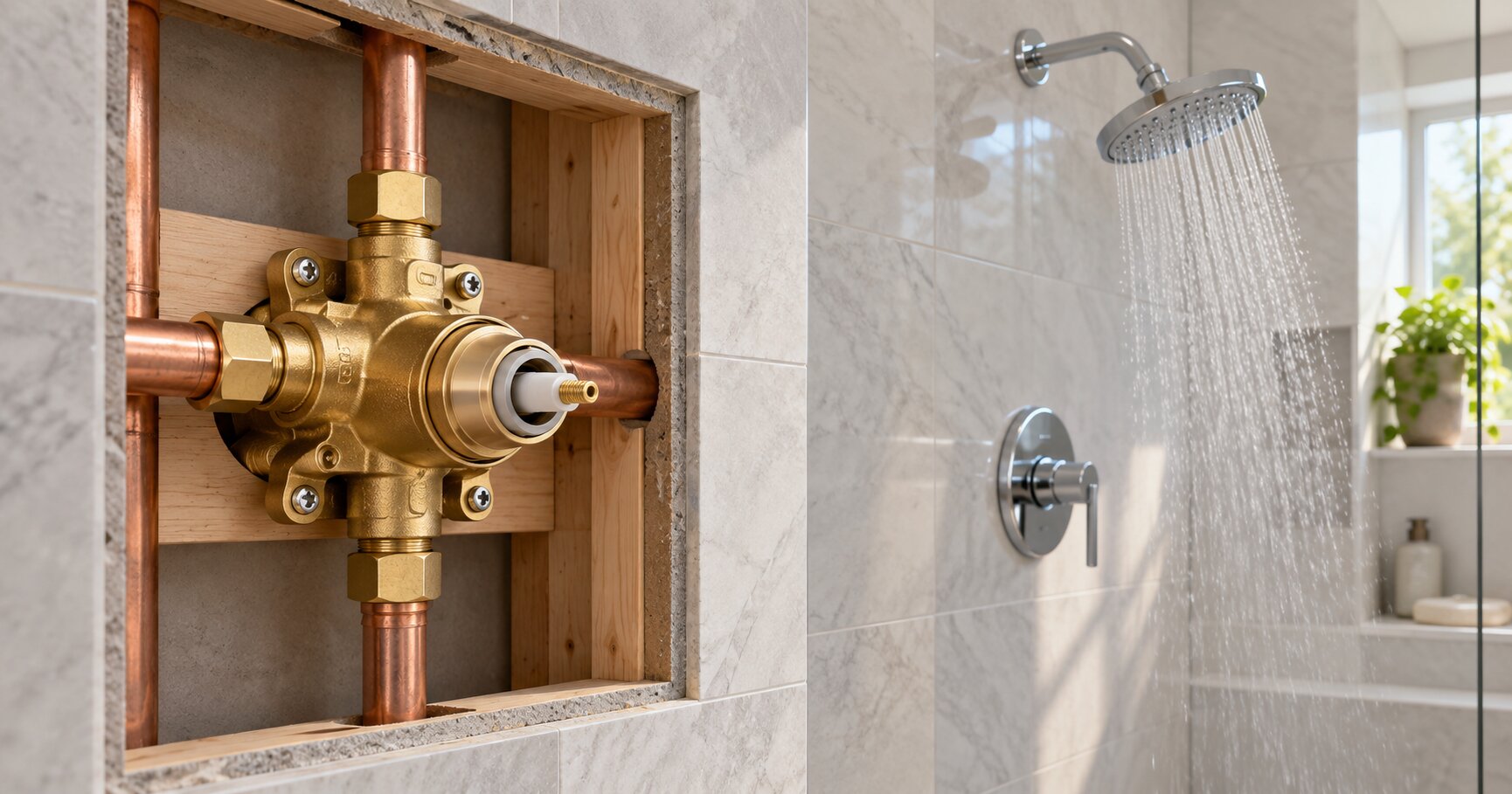
A pressure-balanced valve compensates for water-pressure changes before the water comes out of your shower head. If either the hot or the cold water decreases, the shower valve balances the pressure and reduces the flow of water of the opposite temperature, so your shower temp remains constant. In the event that the cold-water flow becomes significantly reduced, a pressure-balanced valve often reduces the amount of water flowing from the shower head to a trickle.
A thermostatic valve offers the user more control over the flow of water in the shower. You can turn the water off to shave or soap up and then turn it back on again, retaining the same temperature. These valves cost considerably more than pressure-balanced valves, so price-conscience consumers should do some price comparisons before purchasing either shower valve.
Other things to consider before deciding on a valve?
- The number of showers you have
- Your family’s usage of each
- Personal preferences in temperature
Installing an Anti-Scald Valve
While it is possible to replace your existing shower valve with an anti-scald valve on your own, this job generally calls for a professional plumber. Replacing a two-handled system with separate hot and cold faucets requires removing a section of your tile or shower wall.
Anti-scald valves can make showering safer and more pleasant for you and your family if you live in an older home. Because water temperatures can fluctuate, causing showers to reach extreme highs and extreme lows in temperature, installing an anti-scald valve will make your shower temperature more stable. Contact CW Service Pros for help and advice!
4 Benefits of Installing an Anti-Scald Valve
1. Helps Reduce Burn Risks
The primary advantage is temperature control. An appropriately selected and installed valve helps prevent excessively hot water from reaching fixtures, reducing the likelihood of scalding.
It is important to remember that an anti-scald valve does not make hot water completely risk-free. Users should still test water before bathing or showering.
2. Provides More Consistent Water Temperature
Nobody wants a shower that suddenly becomes dangerously hot or unexpectedly cold. Temperature-regulating equipment can help maintain more stable water delivery when conditions within the plumbing system change.
A more consistent temperature can also make showers and other daily activities more comfortable.
3. Adds Protection for Vulnerable Household Members
Children, seniors and individuals with reduced mobility or sensitivity may be more vulnerable to hot-water injuries. Installing suitable temperature-control equipment can provide an additional safety measure.
For households with vulnerable occupants, professional evaluation of the hot-water system can help determine whether additional protection is appropriate.
4. Supports Better Hot-Water System Management
An anti-scald valve can allow a plumbing system to manage the temperature relationship between water storage and point-of-use delivery. The exact temperature settings should be determined according to the equipment manufacturer’s instructions and applicable local plumbing requirements.
This is one reason temperature regulation should be considered as part of the overall hot-water system rather than simply as an adjustment to the water heater thermostat.
Frequently Asked Questions
What does an anti-scald valve do?
An anti-scald valve helps control the temperature of hot water delivered to fixtures. Thermostatic mixing valves generally blend hot and cold water to help maintain a safer, more consistent outlet temperature.
Is an anti-scald valve the same as a mixing valve?
The terms are often used interchangeably when referring to valves that blend hot and cold water to control delivery temperature. However, different valve types have different applications, certifications and operating characteristics.
Can an anti-scald valve prevent all burns?
No. It reduces the risk of excessively hot water reaching a fixture, but it does not eliminate every possibility of scalding. Water should always be tested before bathing or showering.
How do I know if my anti-scald valve is failing?
Sudden temperature changes, unusually hot water, inconsistent shower temperatures or difficulty maintaining the selected temperature can indicate a problem. A plumber should diagnose the system before determining whether the valve needs adjustment or replacement.
Should I install an anti-scald valve myself?
Because the device is part of a home’s hot-water safety system, professional installation is generally the better choice. A qualified plumber can select a suitable valve and verify that it is installed correctly.
Does every home need an anti-scald valve?
Requirements vary according to the plumbing system, fixture, location and applicable codes. A plumbing professional can assess the system and determine what type of temperature-control device is appropriate.
Conclusion
An anti-scald valve is a practical safety feature that helps manage hot-water temperatures and reduce the risk of unexpected scalding. From improving shower comfort to adding protection for vulnerable household members, the right temperature-control solution can make a noticeable difference in everyday plumbing safety.
If your home’s hot water is fluctuating, reaching uncomfortable temperatures, or showing other unusual behaviour, CW Service Pros can help evaluate the system and identify the appropriate plumbing solution. Professional assessment is especially important when dealing with water-heating equipment and temperature-control components.