
AC Vent Dripping Water: What Causes It?
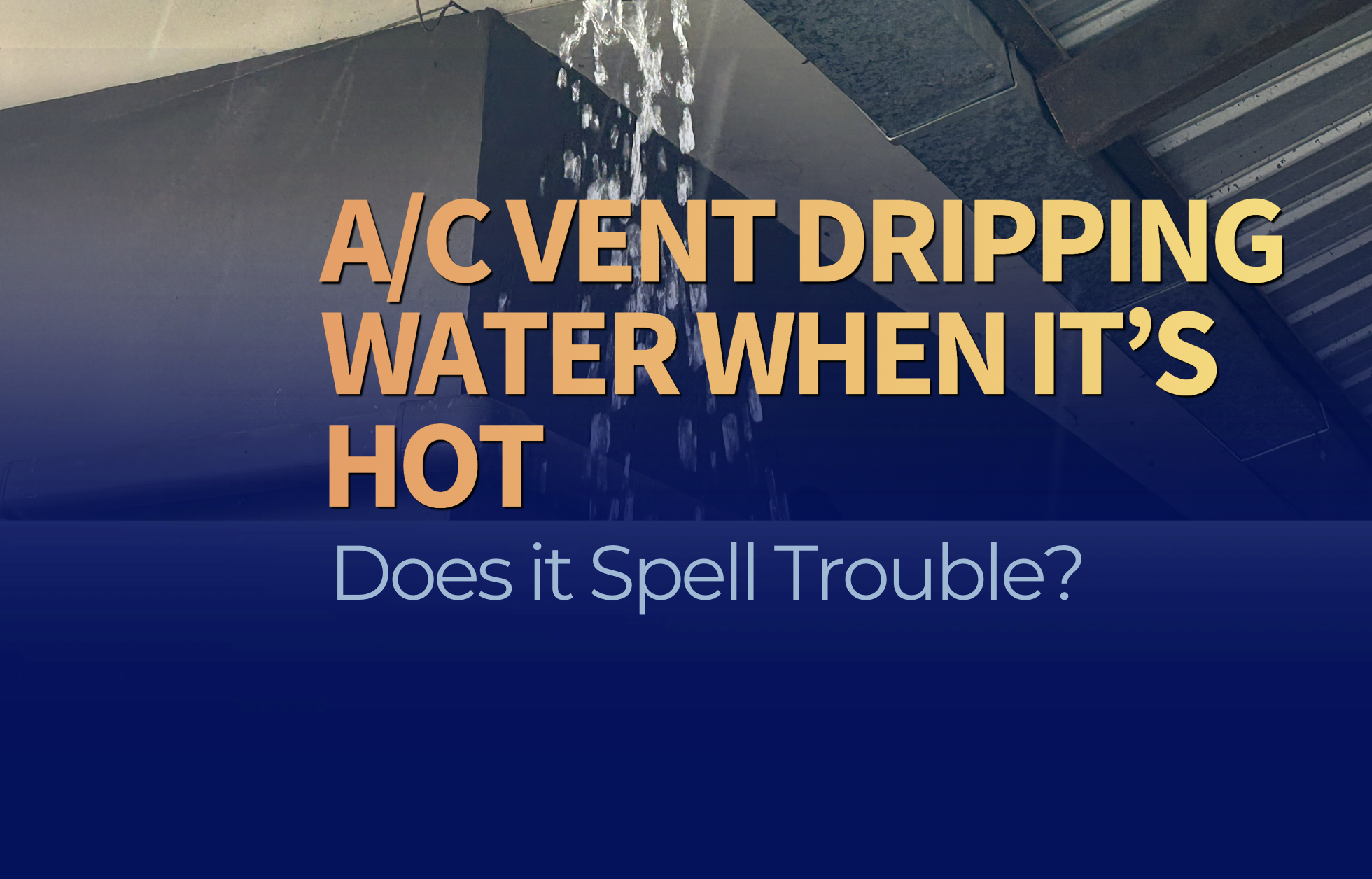
Why Is Water Dripping From My AC Vent?
Reviewed by: CW Service Pros Last updated: September 18
Water dripping from an AC vent is usually caused by a clogged condensate drain line, an overflowing primary drain pan, or moisture condensing on uninsulated ductwork. When the drain line blocks, backup water overflows the pan and drips through ceiling registers, requiring immediate drain clearing and line flushing.
If water is actively dripping through your ceiling vent, turning off your cooling system immediately prevents severe drywall damage and structural warping. Clearing a backed-up condensate line or resolving attic duct condensation requires specialized plumbing and HVAC equipment. When moisture appears around your ceiling registers, contact CW Service Pros to diagnose and resolve the leak.
How Does an AC Condensate System Work?
An air conditioning system removes both heat and humidity from your indoor air. As warm, moist air passes over the icy evaporator coil inside your indoor unit, moisture in the air condenses into liquid water on the metal coil surfaces. This liquid drops down into a primary drain pan located beneath the coil and flows out of your home through a dedicated condensate drain line.
The U.S. Department of Energy states that central air conditioners generate gallons of condensate daily during warm weather, which must be safely routed through a pitched drain pipe. In a typical home, this PVC drain pipe includes a trap to block sewer gases and terminates outside or into a plumbing drain line. If algae, mold, or dust builds up inside the narrow PVC pipe, the drain line clogs. Water then backs up into the primary pan, overflows into the secondary safety pan, and eventually spills onto your attic ceiling drywall, leaking out around the nearest supply vent.
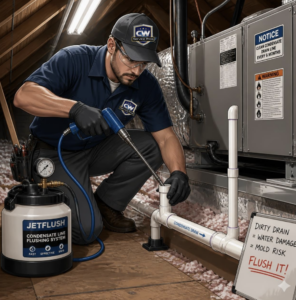
Technician clearing a clogged PVC condensate drain line on an attic air conditioner.
Is a Clogged Condensate Drain Line Causing the Leak?
A clogged condensate drain line is the single most common reason water leaks from a ceiling AC vent. Over a busy cooling season, airborne dust, dirt, and biological growth combine with standing water inside the drain line, forming a thick sludge that blocks water flow.
The U.S. Environmental Protection Agency notes that improper condensate disposal can lead to moisture accumulation inside building assemblies. When the primary line clogs, condensate fills the primary drain pan. If your system lacks a functional float switch—a safety device designed to shut off the air conditioner when water rises—the water overflows into the emergency secondary pan beneath the unit.
Here is how technicians clear and inspect a backed-up AC condensate line:
-
Shut off power to the HVAC unit. Turn off the system at the thermostat and breaker panel to prevent electrical damage during inspection.
-
Inspect the primary drain pan. Locate the drain pan beneath the indoor evaporator coil to check for standing water or rust perforations.
-
Clear the drain line blockage. Use a specialized vacuum or high-pressure nitrogen flush to pull algae and debris out of the PVC drain line.
-
Flush the line with clean water. Pour clean water through the cleanout tee to confirm proper drainage flow to the exterior discharge point.
-
Test the float safety switch. Verify that the secondary emergency switch cuts power to the condenser if water levels rise in the secondary pan.
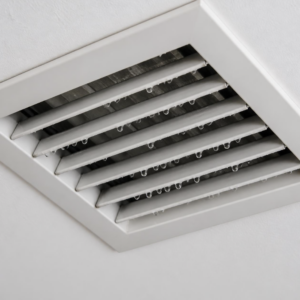
Water dripping from an AC vent is usually caused by a clogged condensate line or duct condensation. Learn how to fix AC leaks in North Texas.
Could Ductwork Condensation Be Dripping Through the Vent?
Ductwork condensation, commonly called “sweating ducts,” causes water to drip through supply vents even when the condensate drain line is clear. This occurs when warm, humid attic air comes into contact with the cold outer surface of uninsulated or poorly sealed air ducts.
ENERGY STAR notes that uninsulated or leaky air ducts in unconditioned spaces like attics severely compromise efficiency and create moisture risks. When warm air strikes cold metal or thin duct flex, moisture reaches its dew point and condenses into droplets on the exterior of the duct. This liquid runs along the duct sleeve and drains directly down through the ceiling register boot.
Here is how duct condensation issues compare to condensate drain overflows:
| Feature | Clogged Condensate Line | Ductwork Condensation |
| Primary cause | Algae or debris blocking PVC drain line | Uninsulated or unsealed ducts in hot attics |
| Leak location | Concentrated near indoor unit or single vent | Spreads across multiple ceiling registers |
| Water appearance | Heavy, continuous drip or pool of water | Light, persistent sweating or moisture beads |
| Primary fix | Clear drain line and flush P-trap | Air seal duct leaks and add duct insulation |
Why Does a Frozen Evaporator Coil Cause Ceiling Leaks?
A frozen evaporator coil causes ceiling leaks because an icy coil melts rapidly once the system cycles off, overflowing the primary drain pan with more water than the drain line can process. Airflow restrictions caused by dirty air filters or low refrigerant levels cause the coil temperature to drop below freezing, turning condensed moisture into solid ice.
The U.S. Department of Energy states that dirty air filters reduce airflow across the evaporator coil, which can cause the coil to freeze and severely impair cooling performance. As ice builds up across the coil fins, it blocks normal condensate drainage. When the system shuts down or melts, a massive volume of water thaws all at once, cascading over the edges of the primary drain pan and leaking through the ceiling plane.
Warning: Attempting to scrape ice off a frozen evaporator coil with sharp tools will puncture the aluminum fins or copper refrigerant tubing, causing costly system failure.
Why Do North Texas Homes Suffer from Dripping AC Vents?
North Texas homes suffer from dripping AC vents frequently because Denton County and the DFW area sit in IECC climate zone 3A, a warm-humid climate characterized by intense summer heat and high ambient humidity. In Lewisville homes, indoor air conditioning units and ductwork are typically installed in unconditioned attics, where summer temperatures regularly exceed 130 degrees Fahrenheit.
The ASHRAE Standard 169-2020 climatic data addendum classifies Denton County as climate zone 3A, where extreme cooling loads force systems to run for extended hours while removing massive quantities of atmospheric moisture. This combination of heavy condensate volume and extreme attic heat creates severe duct sweating and accelerated algae growth in PVC drain lines.
Schedule a professional technician to evaluate your system if you observe any of the following conditions:
-
Water actively dripping or pooling around your ceiling supply registers.
-
Water dripping from the secondary drain pipe located outside near your roof eaves.
-
Visible water standing inside the emergency drain pan beneath your attic unit.
-
Wet drywall, water rings, or peeling paint surrounding your ceiling vents.
-
Your air conditioner running continuously without lowering indoor humidity levels.
Frequently Asked Questions About Dripping AC Vents
Is water dripping from an AC vent dangerous?
Yes, water dripping from an AC vent is a serious issue that can cause ceiling drywall collapse and structural wood decay. The U.S. Department of Energy Guide to Durable Attics states that unmanaged attic moisture damages ceiling assemblies and framing, making immediate system shutdown and professional repair necessary.
Why is my AC secondary drain line dripping outside?
Your AC secondary drain line drips outside because your primary condensate drain line is clogged. ENERGY STAR notes that condensate should flow through the primary line; when that line blocks, water rises into the secondary pan, directing water to the visible outdoor secondary pipe as a warning sign.
Can a dirty air filter cause an AC vent to leak water?
Yes, a dirty air filter can cause an AC vent to leak water by restricting airflow across the evaporator coil. The U.S. Department of Energy explains that restricted airflow causes the coil to freeze into solid ice, which melts into a heavy surge of water that overflows the drain pan.
How do I stop my AC ductwork from sweating?
You stop AC ductwork from sweating by sealing air leaks in the duct joints and insulating the duct sleeves. ENERGY STAR recommends sealing and insulating ducts in unconditioned attics to prevent warm attic air from meeting cold metal duct surfaces and reaching the dew point.
Get Professional Help for Your Dripping AC Vent
Stopping a dripping AC vent requires diagnosing whether your system suffers from a backed-up drain line, a frozen coil, or unsealed attic ductwork. The licensed technicians at CW Service Pros can inspect your evaporator coil, clear clogged condensate lines, and seal duct leaks to protect your ceilings. Call us today at [APPROVED PHONE] to schedule a prompt diagnostic visit, or check our [CURRENT OFFER] for current savings on HVAC and plumbing services. We are here to keep your North Texas home cool, dry, and protected.
Source List
-
U.S. Department of Energy – Maintaining Your Air Conditioner: https://www.energy.gov/energysaver/maintaining-your-air-conditioner
-
ENERGY STAR – A Guide to Energy-Efficient Heating and Cooling: https://www.energystar.gov/sites/default/files/asset/document/HeatingCoolingGuide%20FINAL_9-4-09_0.pdf
-
U.S. Environmental Protection Agency – Mold and Moisture Control: https://www.epa.gov/mold
-
U.S. Department of Energy – Guide to Durable Attics: https://www.energy.gov/sites/default/files/guide_to_durable_attics.pdf
-
ASHRAE Standard 169-2020 climatic data addendum: https://www.ashrae.org/file%20library/technical%20resources/standards%20and%20guidelines/standards%20addenda/169_2020_a_20211029.pdf