
Leak Detection from Your Lewisville TX Plumber
A hidden plumbing leak may begin long before you notice water on the floor. It can develop behind a wall, beneath a slab, or along an underground supply line. Because these areas are difficult to inspect, homeowners often notice changes in water use or unexplained moisture before finding the source.
Recognizing the signs of a hidden water leak in Lewisville can help you decide when to arrange an assessment. An unexpected bill, recurring damp patch, or sound of running water deserves attention. However, none of these clues identifies the exact problem on its own. The next step is to gather useful observations and have the affected plumbing checked.
Warning Signs of a Hidden Water Leak
Leaks do not always produce a visible puddle. Pay attention to changes that persist or return after the surface has dried.
An Unexplained Increase in Water Use
Compare your recent water bills with previous usage. Consider whether irrigation, visitors, household changes, or seasonal activities explain the difference.
If consumption rises without an obvious reason, check accessible fixtures first. A running toilet or dripping faucet may account for the increase. EPA recommends gathering water-use clues and checking common household leak sources before investigating further.
Damp Walls, Ceilings, or Cabinets
Recurring discoloration, peeling paint, swollen cabinet panels, or damp flooring can indicate a moisture problem. Note whether the area becomes wet after a shower, appliance cycle, or rainfall.
These details help distinguish a possible plumbing leak from other moisture sources. A stain shows where water has reached a surface, which may be some distance from where it escaped.
Water Sounds When Fixtures Are Off
An unexplained running or hissing sound can warrant investigation. Before assuming a pipe is leaking, check whether a toilet is refilling, an appliance is operating, or an automatic watering system is running.
Tell the plumber where you hear the sound and whether it is continuous. Avoid opening walls simply because the noise seems strongest in one location.
Persistent Wet Areas Outdoors
An unusually wet patch near a buried water line may deserve attention, particularly when nearby ground is dry. Irrigation faults, drainage conditions, and recent weather can create similar symptoms.
Photograph the area and record when you first noticed it. Its location can help guide an inspection, but it does not establish which pipe or system is responsible.
Simple Checks Before Scheduling Leak Detection
You can collect useful information without dismantling plumbing or entering difficult spaces. Start with fixtures and surfaces that are accessible and safe to inspect.
Check beneath sinks for moisture around supply connections and drain fittings. Look around toilets and accessible appliances for fresh water. Listen for toilets that repeatedly refill, and note faucets that continue dripping after they are turned off.
Prepare the following information:
- Recent water bills and any unusual usage changes.
- Photos of damp areas or visible damage.
- When each symptom started.
- Whether the problem appears during particular activities.
- Details of previous leaks or plumbing repairs.
Avoid disturbing damaged materials or moving heavy appliances to search for a leak. Useful observations can be made without exposing concealed pipes.
Why Similar Symptoms Can Have Different Causes
A high bill, stain, or drainage problem does not automatically mean the same type of leak. Identifying the affected system is an important part of the assessment.
A pressurized water-supply leak may continue even when a particular fixture is unused. A drain leak may become noticeable only when water passes through that section. Moisture from a shower enclosure, roof, or air-conditioning system can also appear near plumbing.
Slow drains and gurgling should be reported, but they do not prove that a sewer pipe is leaking. Likewise, a foundation crack alone does not confirm a slab leak. Share the symptoms without assuming the diagnosis.
What Professional Leak Detection Involves
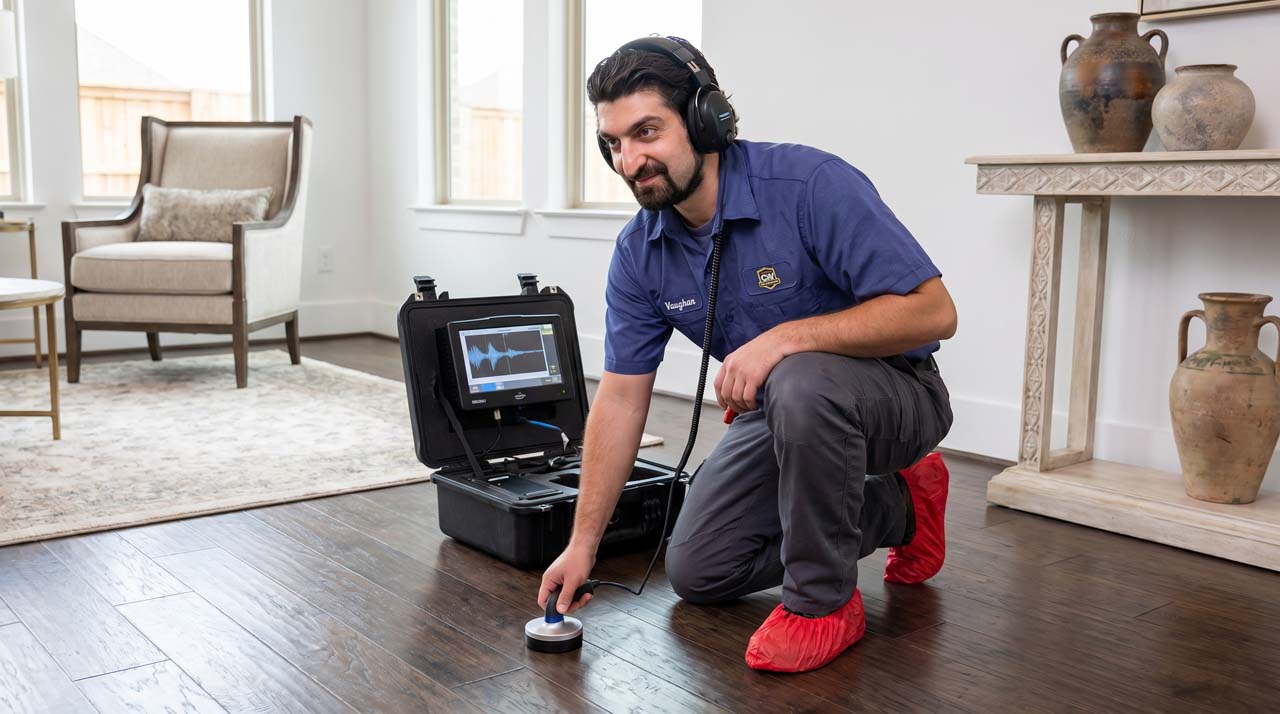
A leak-detection visit should begin with questions about the symptoms and an inspection of relevant accessible areas. The plumber then selects an approach suited to the suspected pipe, its location, and the available access.
Depending on the circumstances, the assessment may involve isolating sections of plumbing, testing the system, or using equipment to narrow down the suspected source. Different methods serve different purposes; no single tool answers every leak question.
Ask the plumber to explain:
- Which system is being assessed.
- What the testing can establish.
- Whether further access may be necessary.
- What remains uncertain after the initial investigation.
Detection can help guide repair planning, but it should not be presented as a guarantee that every leak can be confirmed or repaired without opening surfaces.
Understanding Leaks Beneath a Slab
When water piping beneath a foundation is suspected, the investigation needs to distinguish a plumbing problem from other causes of moisture or movement.
Tell the plumber about warm flooring, recurring dampness, unexplained water use, or previous repairs. Describe where these changes occur and whether they appeared together.
If testing identifies an under-slab leak, ask how the finding supports the proposed repair. Accessing the affected area, rerouting a line, or replacing a section may involve different work. The recommendation should reflect the actual condition and layout rather than a standard solution applied to every home.
What to Do About an Active Leak
If water is actively escaping, focus on limiting further damage where it is safe to do so. Move nearby belongings away from the water and keep people clear of affected electrical equipment.
If you can safely identify and operate the appropriate water shutoff, stop the affected supply. Do not force an unfamiliar or seized valve. Contact a plumber promptly and describe the location, volume, and whether the water continues flowing.
Suspected natural gas leaks require a different response. Leave the area immediately and call 911 and the gas utility from a safe distance. Do not remain inside to investigate or arrange a routine plumbing appointment.
Questions to Ask Before Approving Repairs
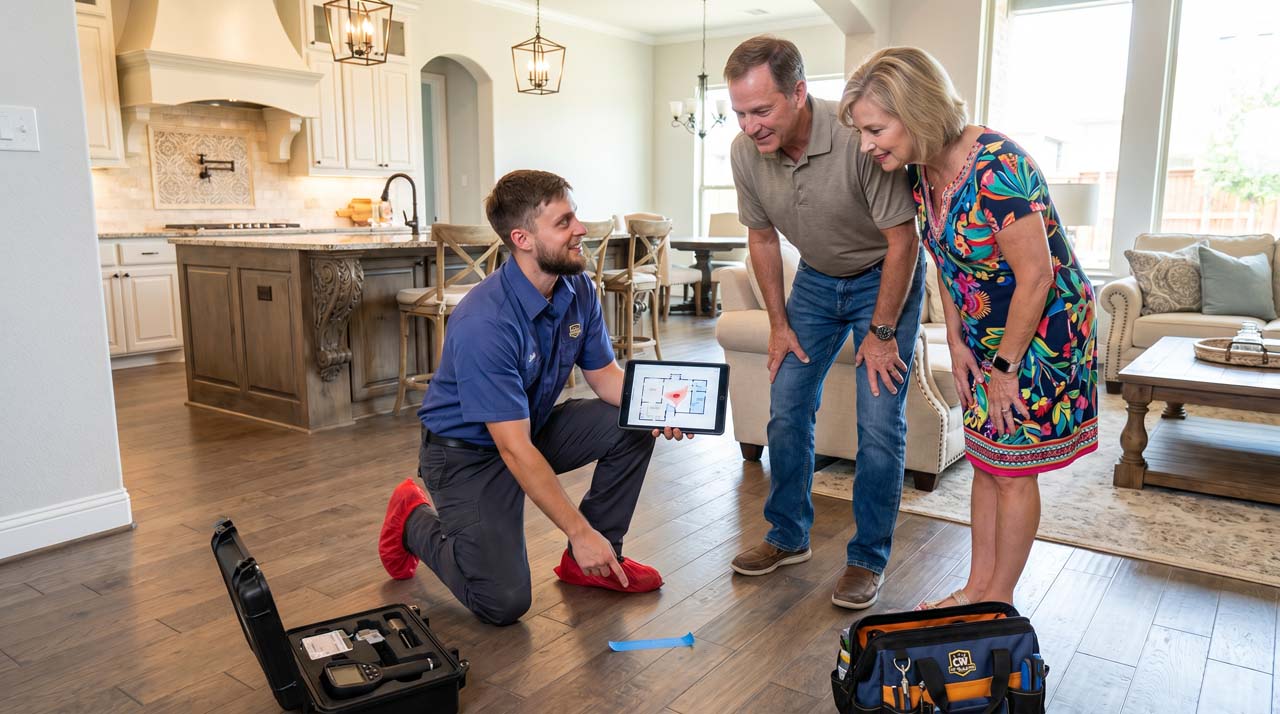
Once the source has been identified, request a clear explanation of the repair scope. Finding the leak, accessing the pipe, completing the repair, and restoring walls or flooring may be separate items.
Ask whether the estimate includes testing after repair, removal of damaged plumbing, and any necessary access work. Confirm who handles surface restoration and whether additional findings could change the price.
For Lewisville homeowners, a useful assessment turns scattered warning signs into a clear explanation of the problem and the available options. Keep records of the findings and completed work so future plumbing concerns can be assessed with that history in mind.

FAQs
What are the signs of a hidden water leak?
Possible clues include unexplained increases in water use, persistent damp areas, staining, or the sound of water when no fixtures should be operating. These observations warrant investigation but do not identify the leak’s location by themselves.
Does a higher water bill always mean a hidden leak?
No. Changes in occupancy, irrigation, or other water use can affect the bill. Compare recent usage and check accessible fixtures, including running toilets and dripping faucets, before assuming the problem is underground.
Do slow drains mean my sewer pipe is leaking?
Not necessarily. Slow drainage can indicate a restriction or another drainage problem. A plumber should investigate the cause rather than treating that symptom alone as proof of a sewer leak.
Can plumbers find leaks without opening walls or floors?
Some investigations can narrow down the source before access work begins. However, the approach depends on the pipe, location, and conditions. Ask what the assessment includes and whether access may be required for confirmation or repair.
Does leak detection include the repair?
That depends on the service agreement. Ask whether the estimate covers investigation only, pipe repair, access work, and restoration. Understanding those items separately helps prevent confusion about the scope.
What should I do if I smell natural gas?
Leave the area immediately and call 911 and the gas utility from a safe distance. Do not stay inside to locate the source or wait for a routine plumbing visit.
Find the Cause Before Choosing a Repair
Unexplained water use and persistent damp areas deserve attention, but similar symptoms can have different causes. Start with accessible observations and arrange an assessment when the source remains unclear. Identifying the affected system and the scope of the problem helps guide an appropriate repair.