
5 Causes of Slab Leaks and What to Do If You Have One
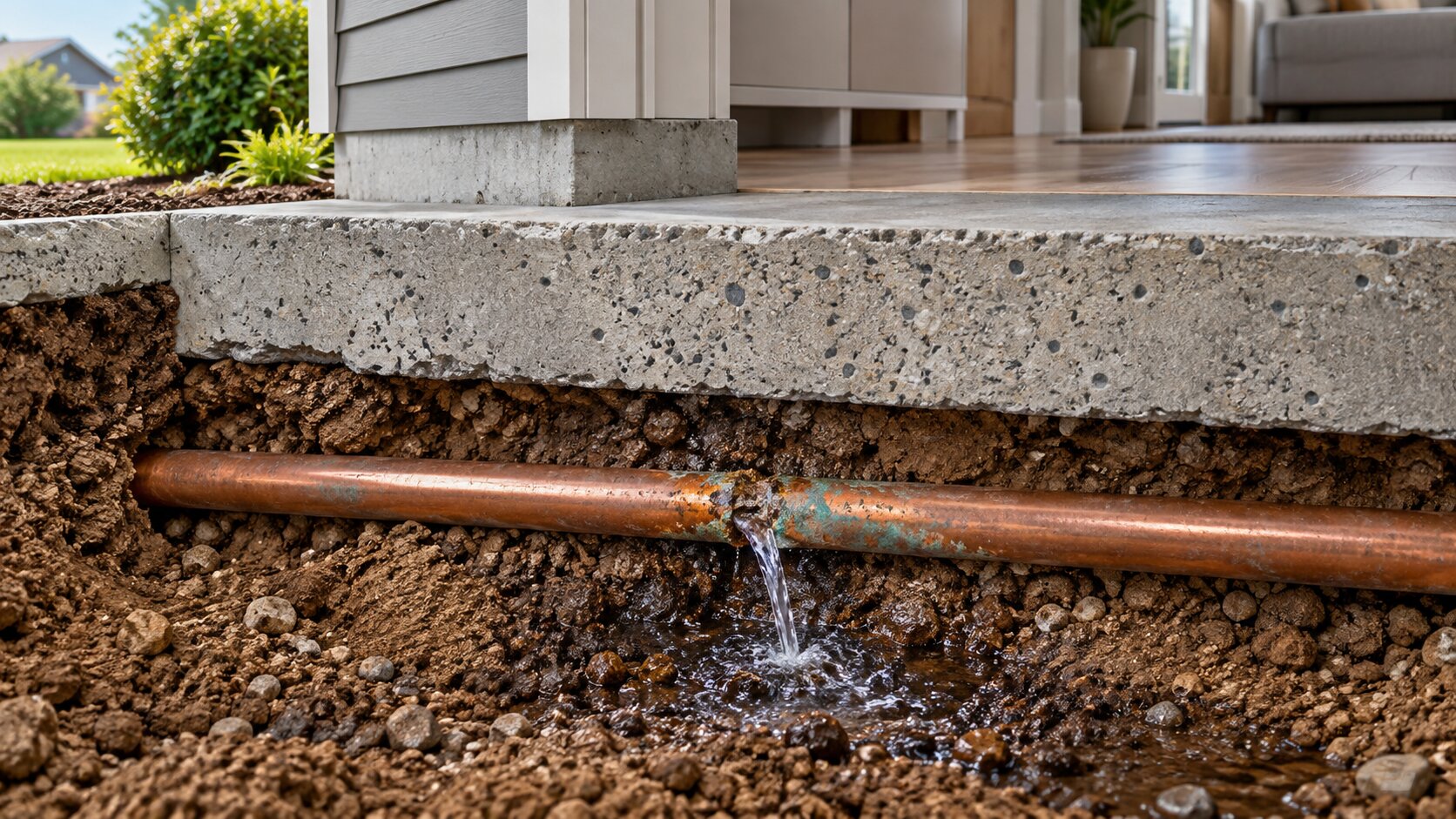
Have you suddenly noticed damp spots on your floor or carpets?
Have you been annoyed by low water pressure in the shower?
Is your utility or water bill higher than usual?
If you answered yes to any of those three questions, you could be dealing with a slab leak.
A slab leak occurs when the plastic pipes inside or underneath a home’s foundation begin to leak. While these leaks can seem small and insignificant at first, they can lead to significant damage and costly repairs. If left unattended, slab leaks can saturate the soil under your home, making your floors uneven and slowly sinking the building into the ground. To prevent your home from suffering such a fate, it’s important to be aware of the primary causes of slab leaks. Below, we discuss just what those are.
If you suspect your home has a slab leak, call us at 972-395-2597 as soon as possible to prevent serious damage and save you money in the long run.
Construction Problems
1. Improper Construction
Perhaps the most common cause of slab leaks is improperly installed or poor-quality pipes. If your water pipes were kinked, bent, or dented
in any way during installation, the affected areas could cause the pipes to leak and potentially burst because of the abrasive properties of water flowing by over time.
Copper pipes, in particular, are at a higher risk of suffering from corrosion, since they are naturally softer and more vulnerable to the elements. In some cases, especially in older homes, a slab leak may require new pipes, rather than a repair.
2. Outside Pressure
Water pressure isn’t the only type of pressure that can cause a slab leak. If the soil shifts under your foundation, it could cause your house to move slightly, putting pressure on the pipes. This can also happen due to:
- An earthquake
- An underground stream
- Soil erosion
Slab leaks from this type of pressure tend to be large and potentially damaging. They can cause quite a bit of flooding if left unchecked.
3. Poor Water Chemistry and Quality
In addition to your water pressure, you should be keeping an eye on your water’s pH level. Water that is excessively acidic (known as “hard”) or excessively alkaline (or “soft”) can corrode pipes. You can identify acidic water by looking for blue or green stains in your bathtub, shower, or sink and a chlorine-like smell.

Leaving this sign of a slab leak unchecked could lead to potentially irreversible water damage. The normal pH of water should be between 6.5 and 8.5.
4. Abrasion
Abrasion is another common cause of slab leaks. When pipes, during the regular course of their use, rub against concrete, gravel, other materials, or other nearby pipes, the constant friction can cause them to gradually wear down and ultimately spring leaks. Hot water pipes are at a higher risk of abrasion. Because they expand as they heat up, they rub against concrete or gravel that surrounds them in the soil, and the constant friction creates leaks.
5. Time
The biggest culprit when it comes to slab leaks—and a majority of the causes listed above—is time. Older homes, which are often installed with copper or galvanized steel pipes, are more at risk. Corrosion, for example, is more likely to happen over time. Extended periods of stress or pressure on pipes can also lead to slab leaks.
Regular maintenance and check-ups can help ensure that your home’s plumbing is in top shape, but it’s important to keep an eye out for irregularities to help prevent slab leaks as well.
What Do You Do If You Suspect a Slab Leak?
If you suspect a slab leak has occurred in your home, you will absolutely want to keep an eye out for these signs:
- Damp spots on the floor and carpet
- Mold under the flooring or carpet
- Hot areas on the floor
- Higher-than-usual utility and water bills
- Low water pressure in the shower and sink
- Sounds of water running even when the water is off
- Soggy spots near the home’s foundation
- High readings from the water meter and unusually high water bills
If you notice any of these signs, it doesn’t absolutely mean you have a slab leak, but you will want to call a professional to have it checked out. Leaving a slab leak alone could cause irreversible damage to your home. It’s not something you want to “wait and see” on.
Call a professional as soon as possible, so they can locate the leak and provide you with the best course of action. It may be a simple fix, with epoxy filling in the leak, or it could call for a re-piping of your home. In any case, an expert can assess and remedy the problem. By acting quickly, you could save your home from significant damage and your family from expenses in the long run.
FAQs
What is the most common cause of a slab leak?
Pipe corrosion, shifting soil, high water pressure, and aging plumbing materials can contribute to slab leaks.
How can I tell if I have a slab leak?
Common warning signs include unexplained increases in water bills, low water pressure, damp flooring, warm spots on the floor, and the sound of running water.
Can a slab leak cause serious home damage?
Yes. If left untreated, a slab leak can contribute to water damage, mold growth, flooring problems, foundation concerns, and other costly issues.
Can I fix a slab leak myself?
Slab leak repairs generally require professional leak detection and specialized plumbing equipment. Attempting to locate or repair the leak yourself can make the problem worse.
How quickly should a slab leak be addressed?
A suspected slab leak should be investigated as soon as possible. Early detection can help limit water damage and potentially reduce repair costs.
Conclusion
Understanding what causes slab leaks can help homeowners recognize potential plumbing problems before they become more serious. Don’t ignore warning signs such as unexplained water usage, damp areas, low water pressure, or unusual sounds. Because slab leaks can cause significant damage beneath a home, professional leak detection is often the safest and most effective way to identify the source.
Suspect a slab leak in your home? Contact CW Service Pros today for professional leak detection and plumbing help before a hidden leak causes costly damage.