
Thinking About a New AC in Dallas? Here’s What You Really Need to Know

Hey there! If you’re living in Dallas like me, you already know how brutal the summer can get. When your AC starts wheezing or just gives up on that 100 degree day, it is miserable! You probably are thinking, “it’s time to find something that can actually keep up with the Texas heat”. I just went through this myself and did a TON of research (pun intended). If you are thinking about a new AC in Dallas, here are the top 10 things I think you should know before you spend your hard-earned cash.
Top 10 Things to Consider When Buying an AC in Dallas (from someone who’s been there)
1. Get the Right Size – Bigger Isn’t Always Better
I learned that picking the right size (measured in BTUs or tonnage) is everything. If it’s too small, it’ll run forever. Too big? It’ll cool fast but won’t dehumidify, so you still feel sticky. Your installer should do a load calculation based on your home—not just guess.
Manual J Calculation Explained
2. Check the SEER Rating
In Dallas, Texas and the Metroplex you legally need a SEER2 rating of at least 14.2, but higher is better—think 16 to 20+. You’ll save money on electricity, especially running the AC non-stop in July.
3. Know What Type of System You Want
You’ve got some options:
- Central AC = whole house
- Mini-splits = great for homes with no ducts
- Heat pumps = do both heating and cooling (perfect for Texas winters and highly energy efficient)
- Window/portable units = single room applications only.
The Spruce AC Types
4. Heads Up on New Refrigerant Rules
There’s a lot of talk this year about new refrigerants (like R32 and R‐454B). Both claim to be better for the environment, but what is better?
Which Refrigerant is Best for the Environment
5. Don’t Skip Checking Your Ductwork or Insulation
Leaky ducts or poor insulation can ruin an otherwise great AC system. Make sure your home and AC Ducts are both sealed tight.
6. Know the Real Cost (And When to Buy)
A central AC system in Dallas usually runs between $10,000 to $20.000. (Don’t trust the come on ads showing a 2 Ton system for only $5000. Most homes in and around Dallas are 4-5 Ton units). If you need new ducts, expect $6k+ more. Best time to buy? When your system has failed and the cost to repair is better allocated to a new more energy efficient system instead of being sunk into an older unit. When temperatures soar over 100 degrees the AC systems, especially single stage units, work hard for long hours.
7. Look Into Rebates & Tax Credits
There’s a 30% federal tax credit (up to $3,200/year) for high-efficiency systems like heat pumps. Check out Energy Star Rated Units. Definitely worth looking into.
8. Pick a Brand That Can Handle Texas Heat
Top brands that perform well in our heat:
- Amana
- Trane
- Carrier
- Lennox
- Goodman
- Daiken
Check out the Newest Type of Heat Pump HVAC Unit-the Amana S Series
9. Don’t Cheap Out on Installation
A good system installed badly won’t perform well. Ask if they do duct testing and load calcs.
Reddit Dallas HVAC Thread
CieloWiGle Buying Guide
10. Get a Maintenance Plan + Solid Warranty
Make sure you’re covered for parts and labor, and sign up for annual maintenance. It helps big time.
Check out CW Service Pros Gold Membership Maintenance Plans
Homes & Gardens Tips
What I’d Personally Recommend
| What to Get | Why I’d Recommend It |
|---|---|
| 16+ SEER Central AC or Mini-Split | More efficient = lower bills. Plus tax rebates! |
| Mini-Split Heat Pump (Zoned Preffered) | Perfect if you don’t have ducts or want to cool only parts of your home. |
| Top Brands: Amana, Lennox, Trane, Carrier | They just work great in Dallas heat. Period. |
Simple Step-by-Step Plan
- Measure your space and check insulation/ducts.
- Ask about SEER ratings, warranties, and rebates. (BTW Amana offers a 99 year-AKA lifetime-Compressor warranty. This is above all other manufacturers.)
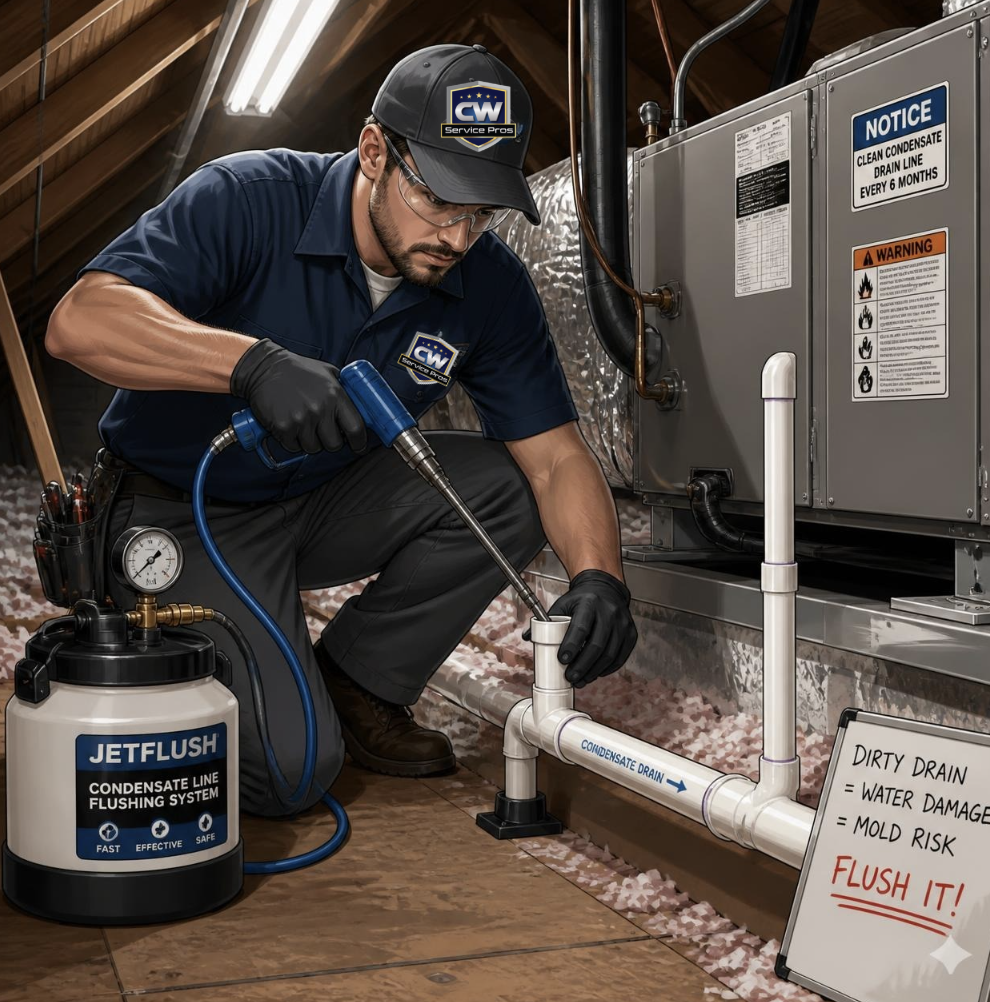
- Don’t skip a maintenance plan. Not only does it keep your unit running at peak performance but it also secures the manufacturer’s warranties. If you miss this step, they can (and often will) void your system’s warranty.
For more information or if you’re stuck between a couple of models and want to delve more into the pros and cons of them, call CW Service Pros HVAC Department to discuss them all. If you are seriously thinking about a new AC in Dallas they are happy to help! You don’t want to mess around with this stuff once it hits 105° in July and August in Texas.
FAQs
How do I choose the right AC size for my home?
Ask a qualified contractor to calculate your home’s cooling load. Floor area alone is insufficient; insulation, windows, orientation, air leakage, and other factors affect the required capacity.
Is a bigger air conditioner better for Dallas summers?
Not automatically. Oversized equipment can cycle too quickly and provide poor humidity control. Choose equipment matched to the calculated load rather than adding capacity simply because summers are hot.
Should I buy the AC unit with the highest SEER2 rating?
Compare the additional purchase cost with estimated operating savings, comfort features, and expected usage. Ask for comparisons based on the same home conditions and electricity rate rather than assuming the highest rating offers the best value.
What should an AC installation estimate include?
Request equipment model numbers, capacity, efficiency ratings, included labor, proposed duct or electrical work, removal of old equipment, applicable permits, startup testing, and warranty details. Ask the contractor to identify exclusions.
Do new refrigerant rules mean I must replace my existing AC?
No. Existing equipment can continue operating. Have a technician assess its condition and repair options, and use only the refrigerant specified for that equipment.
What warranty details should I check before buying an AC?
Check parts, compressor, unit-replacement, and labor coverage separately. Review registration deadlines, exclusions, transfer conditions, and maintenance requirements in the specific model’s warranty certificate.