Water Pressure Problems: Fixing Weak Shower Flows

Tips to Diagnose and Solve Low Water Pressure Issues
Low water pressure can be frustrating and disrupt your daily routine-whether it’s a weak shower stream or a slow-filling sink. Fortunately, many low water pressure issues can be diagnosed and resolved without major plumbing work. Here’s a guide to help you regain your water pressure. Contact CW Service Pros today for a fast solution if you need further assistance.
What Are the Common Causes of Low Water Pressure
Before diving into solutions, it’s essential to understand what could be causing the problem, such as:
- Clogged Pipes or Fixtures: Mineral buildup from hard water can block water flow over time.
- Faulty Pressure Regulator: If your home has a pressure regulator, it can malfunction and reduce water pressure.
- Leaks in the Plumbing System: Even a small leak can reduce pressure in your home.
- Municipal Water Supply Problems: Sometimes, the issue lies outside your home, like a city water supply problem.
- Closed or Partially Closed Valves: A shut-off valve that isn’t fully open can restrict water flow.
Identifying the cause is the first step toward fixing the problem.
How to Diagnose Low Water Pressure in Your Home
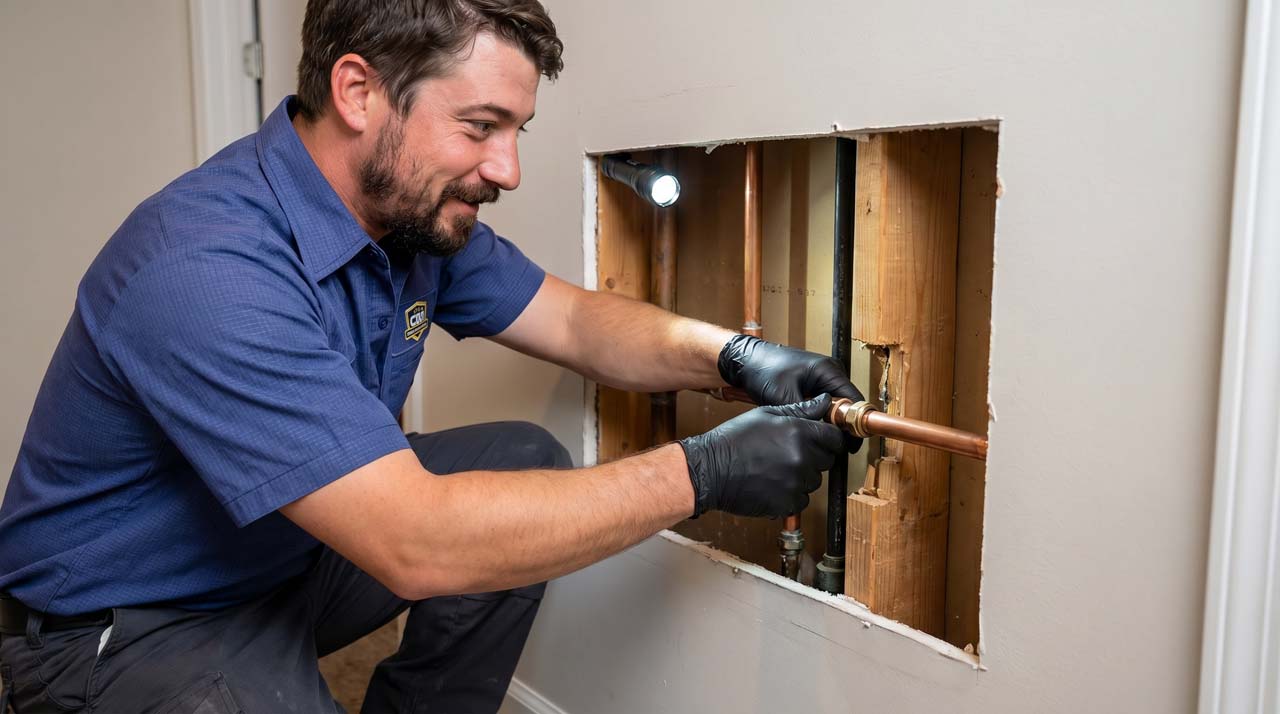
Here are a few steps to diagnosing low water pressure in your home.
1. Check All Faucets and Fixtures
Determine whether the problem is affecting your entire home or just specific areas.
- Low pressure in one faucet or shower? The issue is likely with that fixture.
- Low pressure throughout the house? The problem could be in the main water supply, water heater, or pipes.
2. Inspect the Water Shut-Off Valve
Locate your home’s main water shut-off valve (usually near the water meter or where the water line enters your home).
Ensure the valve is fully open. It may be slightly closed or be leaking, reducing water flow in the home.
3. Test the Pressure Regulator
If you notice a sudden drop in pressure throughout your home, the regulator might need to be adjusted or replaced.
4. Look for Leaks
Leaks can significantly reduce water pressure.
- Check visible pipes under sinks, around your water heater, and along your walls for signs of moisture or dripping.
- Monitor your water meter. Turn off all water sources and check if the meter still moves-this can indicate a hidden leak.
5. Clean Aerators and Showerheads
If the low pressure is isolated to a specific faucet or showerhead, mineral buildup may be the culprit.
- Remove the aerator or showerhead.
- Soak it in vinegar for a few hours to dissolve mineral deposits.
- Rinse and reattach-this often restores normal flow.
Preventative Tips for Maintaining Good Water Pressure
An ounce of maintenance is worth pounds of cure. In other words, preventing water pressure problems is much more efficient than scheduling repairs. Here are a few tips to maintain good water pressure.
- Clean aerators and showerheads regularly to prevent buildup.
- Check your plumbing system annually for leaks and corrosion.
- Monitor your pressure regulator and replace it if it begins to fail.
- Install a water softener or descaler to reduce hard water mineral buildup in your pipes.

FAQ: Low Water Pressure Questions Answered
If you have water pressure questions, CW Service Pros have answers. Check out answers to FAQs.
Why Am I Losing Water Pressure in My Shower?
Low shower pressure is often caused by mineral buildup in the showerhead, a partially closed valve, or a pressure issue in the plumbing system. Cleaning the showerhead or checking the valves is a good first step.
How Do I Fix Water Pressure Problems?
Start by inspecting individual fixtures, checking valves, and cleaning aerators. If the issue is more widespread, check for leaks or problems with the pressure regulator. For persistent issues, contact CW Service Pros today!
Why is my shower weak when other faucets work normally?
The restriction may be local to the showerhead, hose, screen, diverter, or valve. Start by identifying the shower model and checking accessible components according to its instructions. Normal flow elsewhere helps narrow the investigation.
Why is only the hot water weak in my shower?
A restriction in the hot-water path or a shower-valve component may be responsible. Compare hot-water flow at other fixtures and arrange diagnosis if cleaning the showerhead does not resolve it. The appropriate repair depends on the valve model.
Can I clean my showerhead with vinegar?
Check the manufacturer’s cleaning instructions first. Some products allow diluted vinegar, while others have different cleaning methods or finish restrictions. Avoid applying a generic soaking procedure to every showerhead.
Should I remove the showerhead’s flow restrictor?
Follow the manufacturer’s instructions and preserve the product’s designed components. Diagnose blockage or supply problems first. WaterSense-labeled showerheads are independently certified for both water efficiency and performance.
Why does shower flow drop when another fixture runs?
Simultaneous water use can reveal limits or restrictions in the supply system. Note which fixtures trigger the change and whether temperature also fluctuates. This information helps a plumber assess the supply and shower valve.
Will a new showerhead solve the problem?
It may help if the existing head is blocked, damaged, or unsuitable for your needs. It will not correct an upstream restriction or supply-pressure problem. Confirm the cause before replacing parts.
Contact CW Service Pros
Still struggling with low water pressure? CW Service Pros is here to help. Our expert plumbers can diagnose your plumbing issues and restore your home’s water pressure quickly and efficiently.
Contact CW Service Pros today for professional plumbing services!