



Call CW Service Pros for Expert Slab Repair in North Texas
Have you noticed signs of a slab leak at home? Slab leak repair can save a lot of money and time for you and your family. If you suspect a slab leak, it’s vital to act right away. A slab leak can cause significant damage to your home’s foundation. Left unchecked, it can even cause water damage throughout your home.
Don’t sleep on a slab leak. Call CW Service Pros for fast, expert leak detection and slab leak repair services in North Texas.
What Is a Slab Leak?
A slab is a kind of home foundation made of poured concrete. This layer is around four to eight inches thick and forms a sturdy base for the home. Most homes in North Texas have slab foundations.
Several important plumbing elements are routed in or beneath the slab. These include the:
- Incoming water line
- Hot water line
- Outgoing sewer line
- Gas line
If there’s a plumbing leak at this location, it’s referred to as a slab leak.
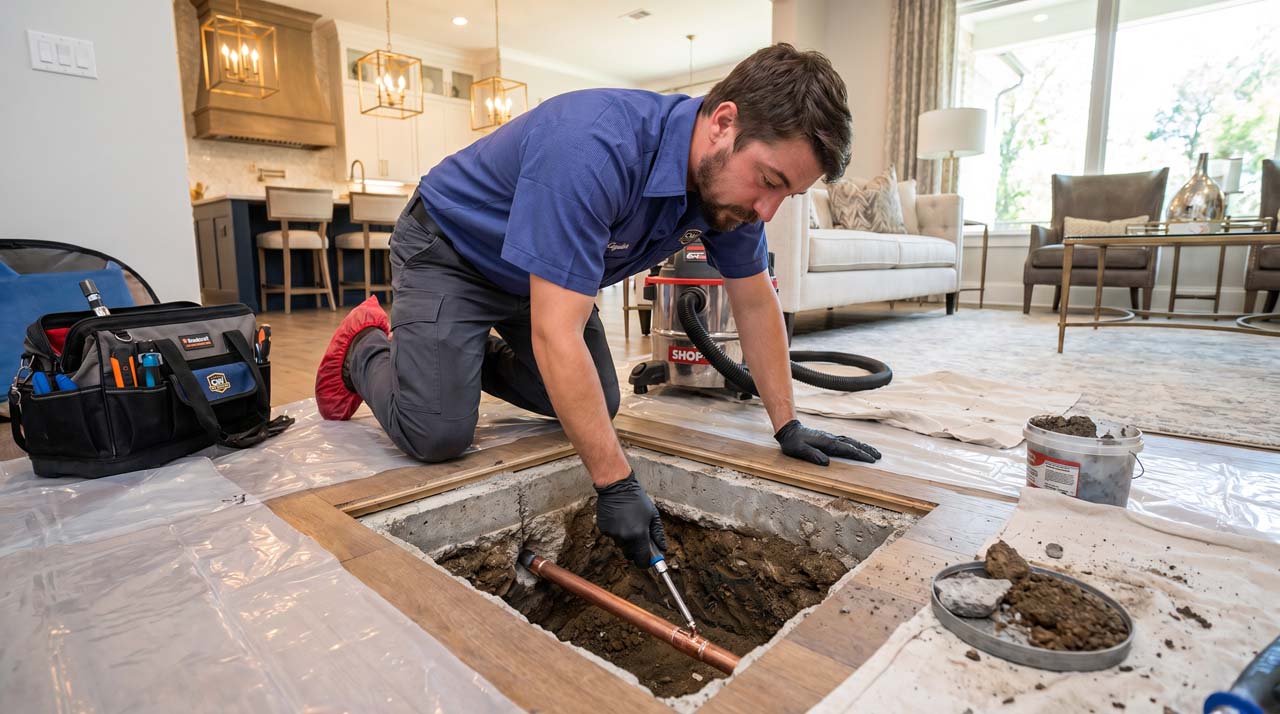
There are several ways to perform a slab leak repair. The most appropriate method depends on:
- How big the leak is
- Where the leak is located
- What caused the leak
- The age of your house and its plumbing
- The type of line affected
Older pipes are more vulnerable to clogs, in part because accumulated rust in cast iron pipes and sediment or grease buildup narrows pipes over time. Any damage to a pipe can disrupt the flow of water and increase the risk of a clog.
Causes of Slab Leaks in North Texas
Slab leaks can develop for various reasons, some of which are related to location. Common causes of slab leaks include:
Shifting Foundations
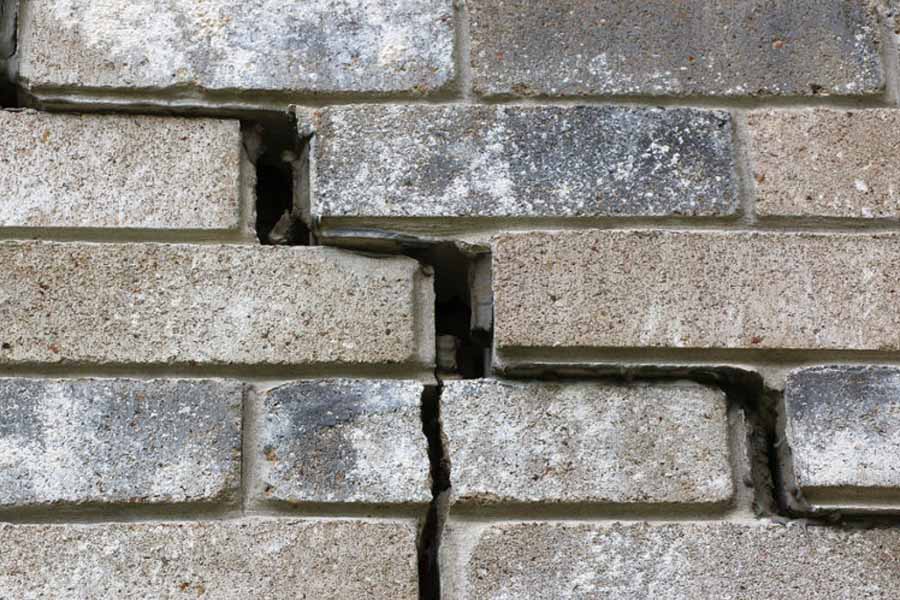
In some areas, foundation shifts can be caused by shifting soil and the effects of groundwater, usually as a result of underground lakes or streams. In North Texas, the more common culprits of slab leaks are frequent and extreme climate changes and soil movement that results from these changes.
- Soil
Around two-thirds of North Texas homes are built on clay soil, which expands and shrinks depending on its moisture content. This can destabilize the soil beneath a slab foundation, causing a ground shift that damages the pipes and/or cracks the concrete slab. - Climate
In summer, low rainfall and high temperatures cause heightened levels of soil contraction. This can increase destabilization and put even more pressure on your slab and the pipes beneath.
Poor Construction or Materials
If pipes are bent, kinked, or damaged when laid, or low-quality materials are used, the pipework is more vulnerable to leaking or even bursting.
Corrosion
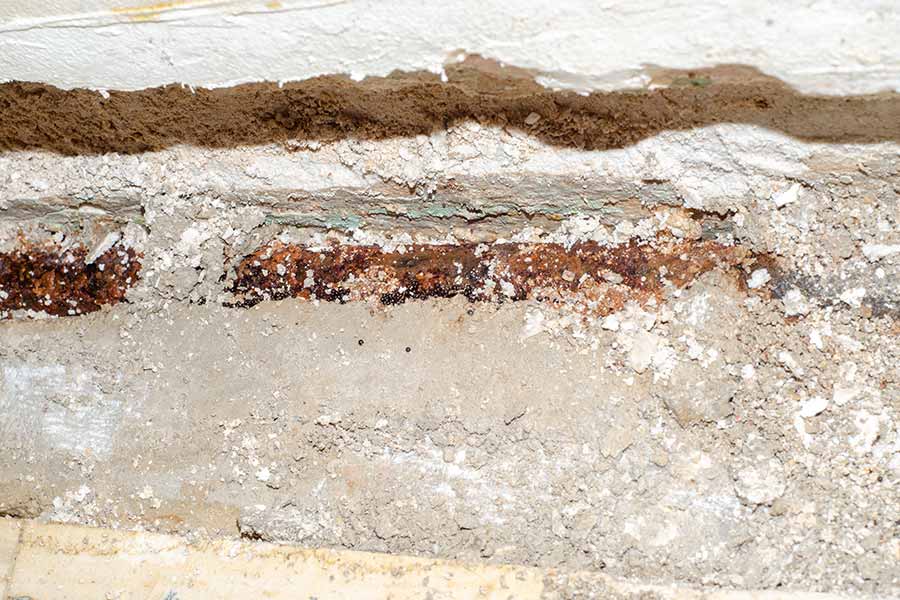
Cast iron pipes in the soil will corrode and break over time. The cast iron pipes that were installed by builders in the North Dallas area over 30 years ago are near the end of their useful life. Water flowing through these pipes over the years has led to rust and splintering of the pipes and made them very vulnerable to breaking.
High Water Pressure
Copper is a relatively soft metal, which means it has a maximum water pressure it should carry. Copper is able to move a little bit more as soil shifts, so it is a good choice for water service in the North Dallas area. Still, if copper gets an indentation due to rubbing on a rock, eventually it will begin to leak.
Long-Term Damage
Wear-and-tear damage accumulates over time in all plumbing systems. Even the best quality materials aren’t immune. Wear-and-tear can be caused by something as simple as the friction of pipes rubbing against soil, rocks, or the concrete foundation. The older your home is, the more vulnerable your plumbing is to this kind of damage.
Are Slab Leaks Common in North Texas?
Most of the homes in Dallas-Fort Worth have slab foundations. Since Dallas doesn’t have a lot of basements because the water table is too high and the soil shifts too much, slab leaks are common in Lewisville and other North Texas suburbs in the DFW area.
The combination of the hot, dry climate and clay soil makes concrete foundations more vulnerable to cracking or shifting. If a slab foundation shifts or cracks, it can put pressure on plumbing lines and cause a leak in or beneath the slab.
Is a Slab Leak a Serious Problem?
A slab leak can be a major issue, but it doesn’t always have to be. Most slab leaks start out as small and slow leaks. It’s possible to avoid serious damage if the leak is found and a slab leak repair is completed quickly. Neglecting a slab leak gives it time to get bigger. Eventually, it could cause major water damage and foundation issues.
Consequences of an unchecked slab leak can include:
- Soil erosion and destabilization, potentially causing cracks in the slab foundation and floors
- Water penetration into the floors and walls
- Mildew, mold, and wood rot that damages soft furnishings and other possessions
- Structural displacement that affects the walls and roof of the home
The worst-case scenario for a slab leak is that pressure builds up underneath the concrete and causes one or more pipes to burst, resulting in flooding and massive water damage. Ongoing damage will cause foundation problems and affect the structural integrity of the property.